
Our Projects
Firm generation, storage and grid infrastructure, developed in phases with clear gates and published status.
Ghana Combined-Cycle Power Plant
Our flagship development is an 810 MW gross (785 MW net) combined-cycle power plant built on GE S209FA 2×1 equipment — a never-fired block with zero operating hours and full rotor life remaining. The plant delivers 54–57% net efficiency (LHV) and will connect at 330 kV to Ghana's GRIDCo backbone.
Simple-cycle operation of the first gas turbine can bring interim capacity to the grid while the combined-cycle configuration is commissioned. A 100 MW / 400 MWh battery energy storage system will be operational approximately one year before combined-cycle COD.
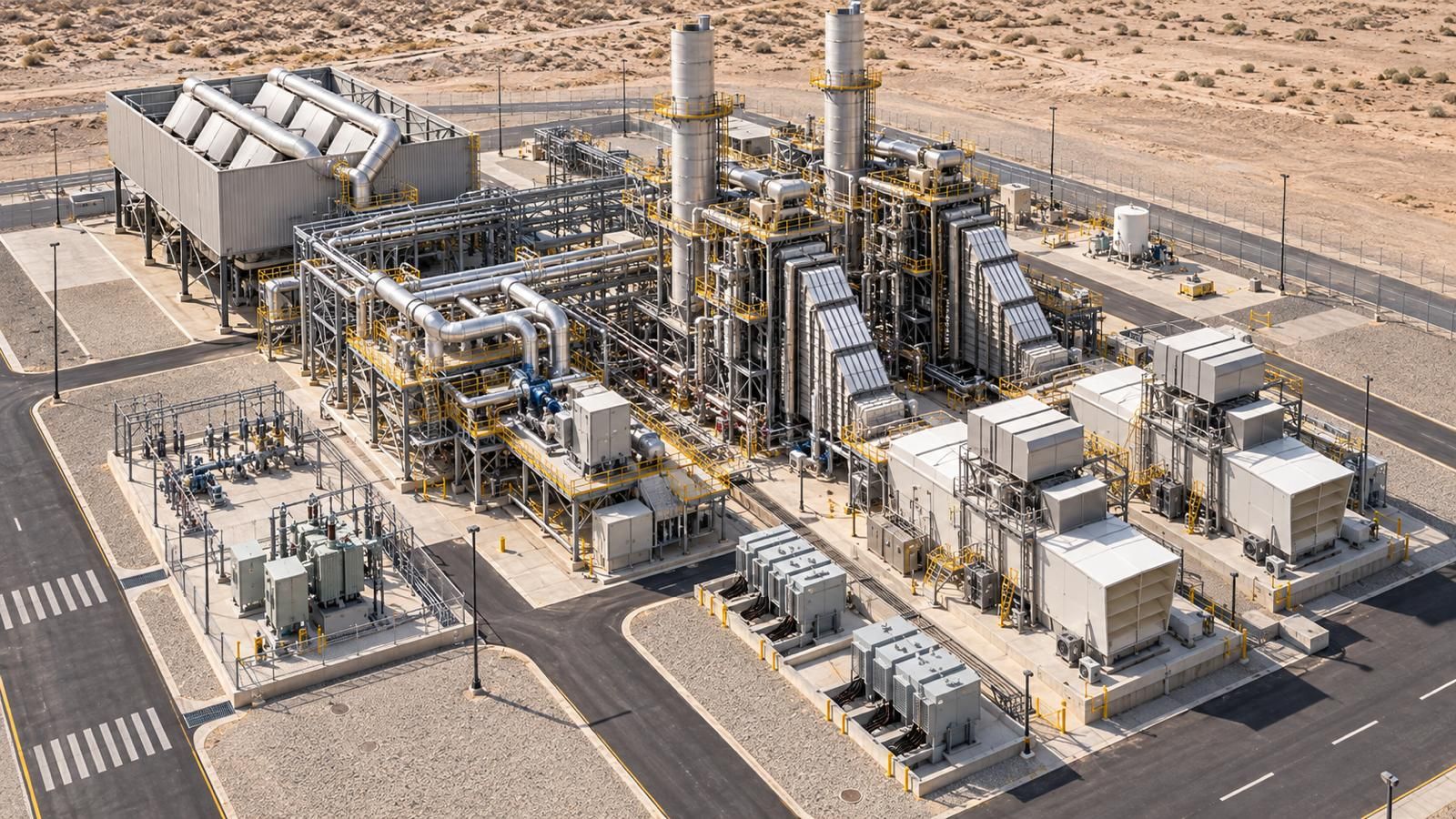
Key parameters
| Equipment | GE S209FA — 2 × GE 9FA gas turbines, 2 × triple-pressure reheat HRSGs with new duct burners, 1 × reheat condensing steam turbine |
| Net output (ISO) | 785 MW net · 810 MW gross · ~1,600 MW if second block exercised |
| Net efficiency (LHV) | 54–57% |
| Fuel | Natural gas primary (126–138 MMscfd at 33–38 bar) · Distillate backup (~63,000 bbl on-site storage) |
| Grid connection | 330 kV · Breaker-and-a-half switchyard · GRIDCo Grid Code |
| Battery storage | 100 MW / 400 MWh (expandable to 200 MW / 800 MWh) · LFP liquid-cooled · Grid-forming |
| Site area | 91–143 acres |
| Construction programme | ~34 months construction · COD at Month 40–46 from NTP |
| Total project cost | US$1,098.7M (AACE Class 5 · ~US$1,400/kW net) |
All outputs are platform-typical at ISO conditions. Site-rated output at Ghana ambient (32°C design point) is estimated at 725–770 MW gross with duct firing. Total cost estimate is AACE Class 5 accuracy (range US$851M–US$1,508M); plant price is fixed, construction parametric. Cost and programme will be updated at Gate 2.
Development gates
- In progress
1 · Confirm
Customer load, site options, equipment identity, title and preservation records.
- In progress
2 · Value
All-in cost, offtake, financing, fuel price and emissions.
- In progress
3 · Screen
Grid route, gas supply, cooling, heavy haul, permits.
- Upcoming
4 · Decide
Independent diligence, risk allocation, procurement route and approvals.
Site & Infrastructure
The six critical pillars that define site selection, supply logistics and commercial reach for the flagship plant.
Preferred Location
Site criteria include a minimum developable land footprint within corridor distance of the GRIDCo 330 kV backbone, a natural-gas pipeline, access to a perennial water source and all-season road access for heavy haul. Multiple candidate sites across Greater Accra, the Central Region and the Western Region are under preliminary review.
Gas Supply Arrangement
Primary fuel will be delivered via the West African Gas Pipeline or GNGC domestic infrastructure under a Gas Sale and Purchase Agreement with an approved supplier, sized to the contracted capacity of the plant. Dual-fuel capability preserves operational flexibility, with on-site distillate storage providing backup during supply interruptions.
Water Supply
Reliable raw-water access is required for steam-cycle make-up, closed-loop cooling-tower top-up and auxiliary systems. Site selection prioritises proximity to a perennial water body or a Ghana Water Company connection point. Closed-loop cooling design minimises consumption and targets zero process discharge to meet EPA permit requirements.
Fiber & Communication System
Redundant, low-latency fiber is required between the plant and the GRIDCo National Control Centre for SCADA telemetry, protection signalling and revenue metering. The plant DCS/EMS will connect to the BlackStar operations centre over a dedicated private MPLS circuit, with satellite backup ensuring continuous monitoring capability.
Transmission EHV Interconnection
The plant will connect at 330 kV — Ghana's Extra High Voltage backbone — via a dedicated grid-entry substation designed to GRIDCo Grid Code standards. Substation layout, busbar configuration, protection, SCADA integration and export-capacity allocation are being developed jointly with GRIDCo under a Grid Connection Agreement.
Cross-Border Selling Opportunities
Ghana's West African Power Pool membership creates export pathways to Côte d'Ivoire, Togo, Benin, Burkina Faso and beyond under the WAPP Interconnection Network. Firm cross-border volumes will be structured through Power Purchase or Energy Wheeling Agreements with approved off-takers in ECOWAS member states, increasing revenue diversification and plant utilisation.
Battery Energy Storage
Grid-scale storage to support system stability and make the most of future solar generation.
A proposed 100 MW / 400 MWh battery energy storage system providing fast frequency response, evening peak support and firming for solar output.
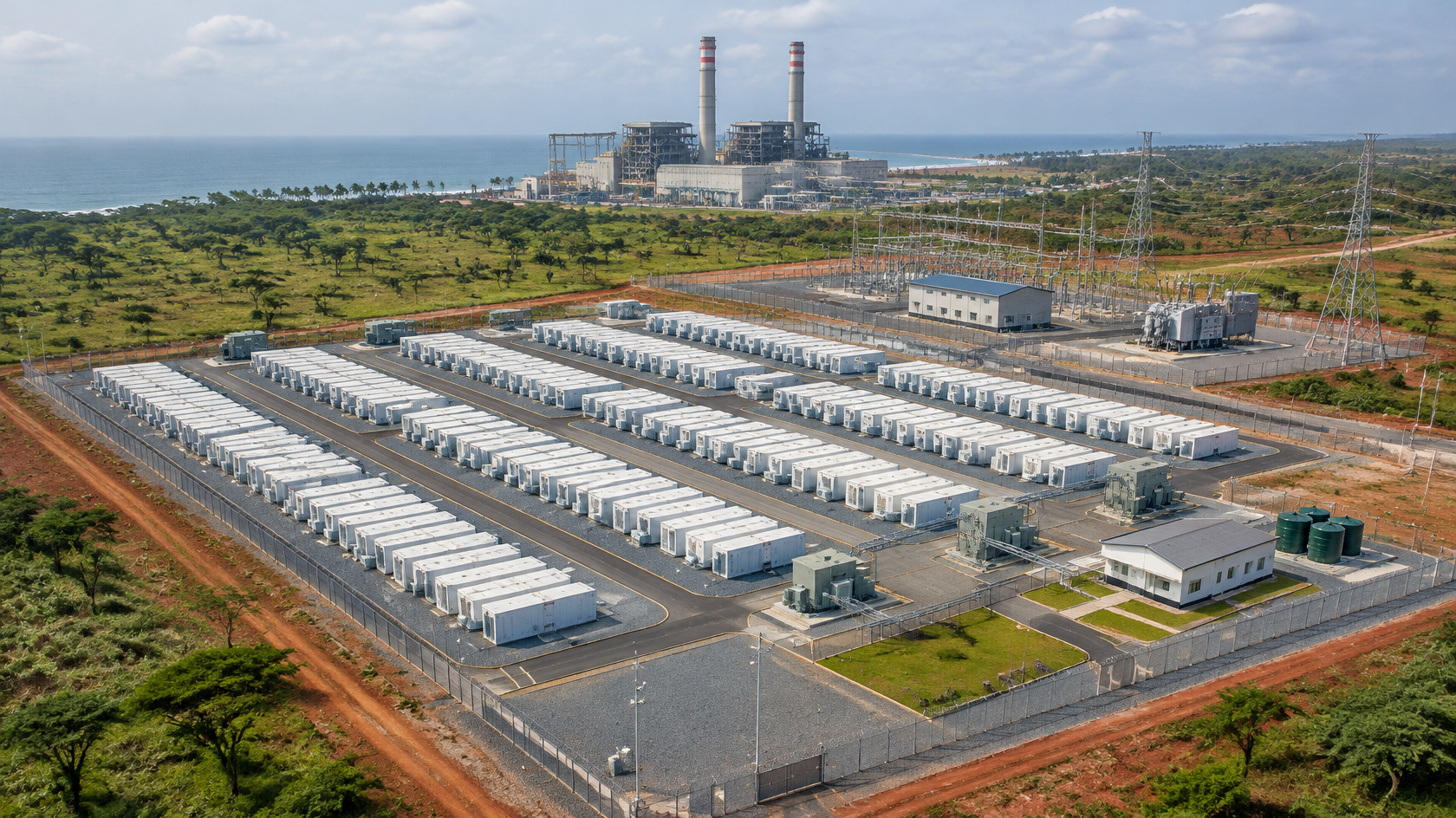
Frequency support
Fast response to grid disturbances, improving system stability.
Peak shaving
Stored energy dispatched during evening demand peaks.
Solar firming
Smooths solar output so renewables can be relied on.
Transmission & Grid
Lines, substations and grid infrastructure built to the National Electricity Grid Code, planned in coordination with GRIDCo as owner and operator of the national system.
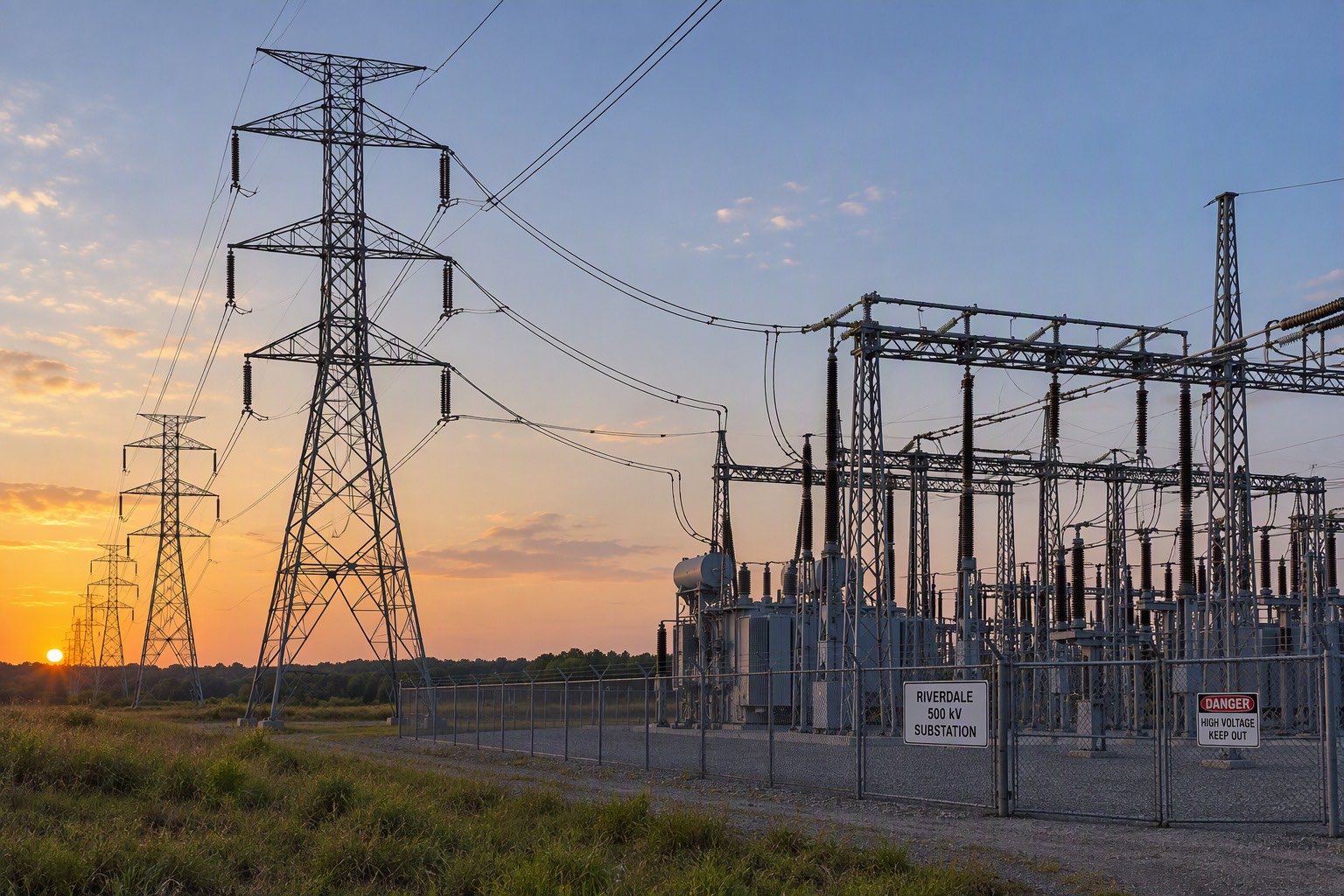
Evacuation lines & substations
Connecting our plant at 330 kV to Ghana's Extra High Voltage backbone via a dedicated grid-entry substation designed to GRIDCo Grid Code standards.
Dedicated supply
Lines serving bulk and industrial customers, subject to licensing.
Transmission Infrastructure
Build-own-operate-transfer arrangements for reinforcement lines, substations and reactive-power equipment.
Communications and Security
Protection, SCADA, metering and control, and future WAPP interconnection.